.png)
Are anesthesia tattoos safe? What you need to know
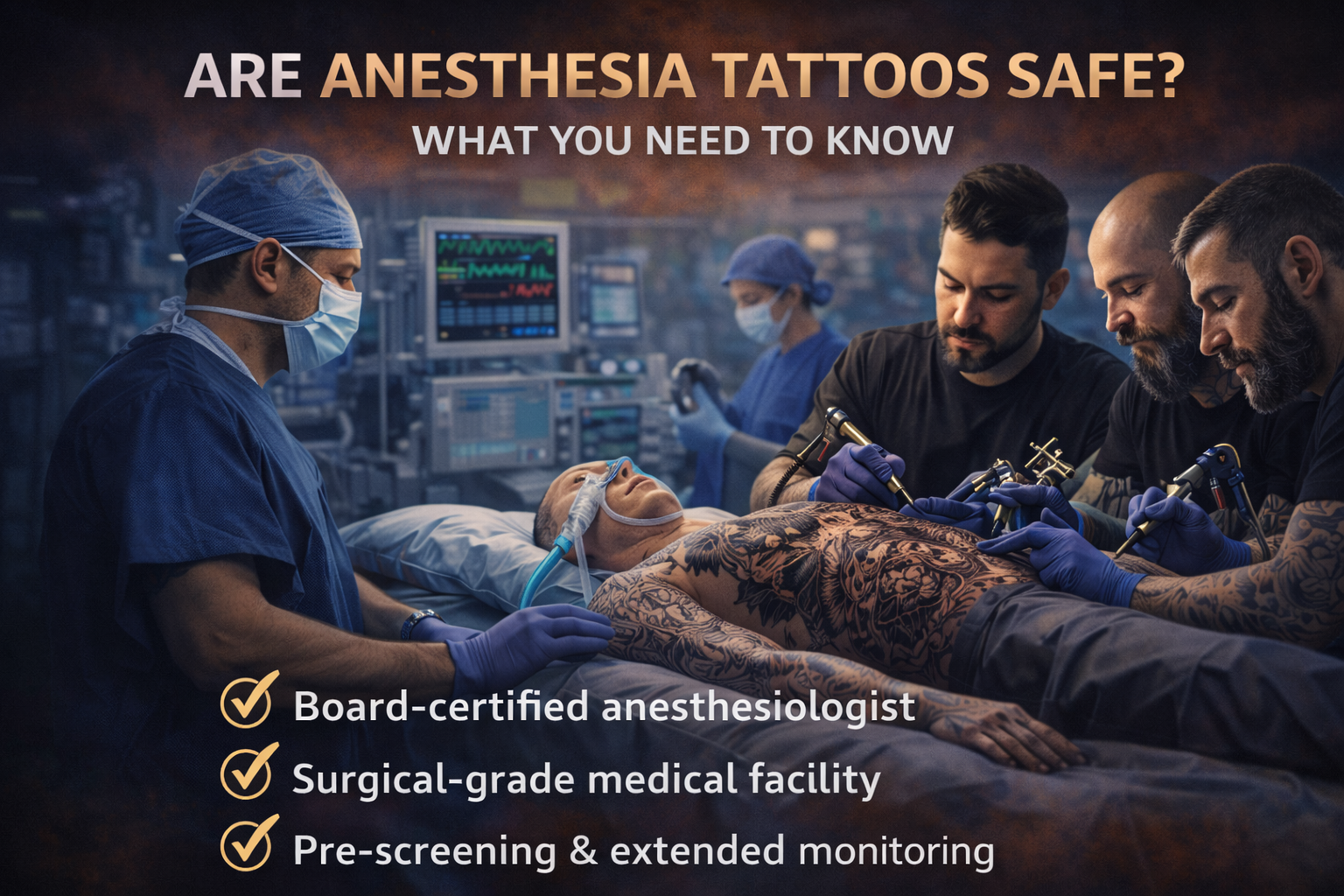
Anesthesia tattoos are safe when they are performed in a medical-grade facility with a board-certified anesthesiologist, proper patient screening, and full medical monitoring before, during, and after the procedure.
Safety depends entirely on how the anesthesia tattoo is structured - not simply where it is performed.
This is why anesthesia tattoos should never be treated like a standard tattoo add-on.
What makes anesthesia tattoos safe
When done correctly, anesthesia tattoos follow protocols similar to elective outpatient medical procedures. Safety is built around several non-negotiable elements:
- A board-certified anesthesiologist
- A licensed medical support team on standby
- A surgical-grade or plastic surgery center
- Continuous vital sign monitoring during the session
- Structured recovery and post-procedure observation
Without these components, anesthesia tattoos should not be performed.
Medical screening before an anesthesia tattoo
Safety begins before the tattoo session.
Clients undergo medical screening to determine whether they are a suitable candidate for anesthesia. This typically includes:
- Review of medical history
- Evaluation of medications or underlying conditions
- Assessment of anesthesia risk factors
This screening process ensures that anesthesia tattoos are only performed on clients who can safely undergo the procedure.
Why anesthesia tattoos require a medical facility
Anesthesia tattoos are not done in traditional tattoo studios.
They are performed inside state-of-the-art plastic surgery or surgical centers, equipped with:
- Emergency medical equipment
- Sterile environments
- Recovery rooms
- Medical monitoring systems
This environment is critical for managing anesthesia safely and responding immediately if needed.
Artist teams and anesthesia safety
Another key safety factor is how the tattoo itself is executed.
Anesthesia tattoos are typically completed by a team of 4–5 professional tattoo artists working simultaneously. This reduces:
- Total time under anesthesia
- Physical stress on the body
- Risk associated with excessively long single-artist sessions
Each artist focuses on specific sections of the tattoo based on their expertise, allowing the session to be completed efficiently and safely.
Post-procedure recovery and monitoring
Safety does not end when the tattoo session is complete.
A minimum of 48 hours of post-procedure monitoring with doctors on standby is standard.
This recovery period allows medical professionals to:
- Monitor vital signs
- Address any post-anesthesia symptoms
- Ensure the client is stable before normal activity resumes
This extended monitoring is one of the most important safety differences between properly structured anesthesia tattoos and unsafe alternatives.
Are anesthesia tattoos safe in Colombia?
A common concern is whether anesthesia tattoos performed outside the United States are safe.
When performed in Colombia under proper medical protocols, anesthesia tattoos are just as safe as those performed in the U.S.
The key factors—board-certified anesthesiologists, surgical facilities, medical screening, and monitoring—are the same.
In many cases, Colombia offers:
- Modern medical facilities
- Highly trained medical professionals
- More efficient coordination between medical and tattoo teams
Safety is determined by standards, not geography.
Who is a good candidate for anesthesia tattoos?
Anesthesia tattoos are generally suited for clients who:
- Are in good overall health
- Want large-scale tattoos (full sleeves, backs, torso)
- Have low pain tolerance or anxiety around tattooing
- Are medically cleared for anesthesia
Not everyone is a candidate, which is why screening is essential.
How Global Inked approaches anesthesia tattoo safety
Global Inked treats anesthesia tattoos as a medical-first experience, coordinating:
- Board-certified anesthesiology
- Licensed medical support staff
- Surgical-grade facilities
- Artist teams experienced in anesthesia-assisted tattooing
- Structured recovery and monitoring protocols
Safety is built into every step of the process, from consultation to recovery.
Final takeaway
Anesthesia tattoos are safe when performed with proper medical oversight, board-certified anesthesiology, surgical-grade facilities, and extended post-procedure monitoring.
The key to safety is not shortcuts or location—it’s structure, standards, and professional coordination.